 For Everyone
7 Local Flavor Deals for Neighborhood Savings
by AIR.POG Team
You've got a short window before dinner, a meeting, or the next errand. You want something close, distinctive, and worth the stop, not a generic coupon catalog that forces you to scroll through irrelevant offers. Local flavor deals are timely opportunities tied to neighborhood food, entertainment, services, markets, and specialties, so the best source depends on what you need right now.
This list compares seven options by distance, immediacy, redemption friction, and local character. AIR.POG is the map-first choice for live proximity discovery. Groupon brings broad marketplace coverage, Travelzoo emphasizes curation, Restaurant.com focuses on dining certificates, Nextdoor reaches neighborhood businesses, Rakuten rewards routine in-store purchases, and TodayTix targets live entertainment. Before changing your route or committing to an offer, check the map result and short-form feed examples. They can reveal whether a deal is nearby and useful today.
Table of Contents
- 1. AIR.POG
- 2. Groupon
- 3. Travelzoo Local Deals
- 4. Restaurant.com
- 5. Nextdoor Local Deals
- 6. Rakuten In-Store Cash Back
- 7. TodayTix Including Goldstar Inventory
- 7-Platform Local Deals Comparison
- Turn a Nearby Find Into a Better Plan
<a id="1-airpog"></a>
1. AIR.POG
You are parked near a restaurant before dinner, with only a few minutes to find something distinctive nearby. AIR.POG answers the practical question, What can I use near me right now? Its map-first progressive web app uses your current location or a selected city to place local promotions on an interactive map. Choose an offer, confirm its distance and direction, then move into one-tap routing instead of copying an address between listings and navigation.
The platform uses OpenStreetMap and CARTO-backed mapping. CARTO documents its vector-tile basemaps and public Voyager-style tile endpoint, while OpenStreetMap's standard tile structure follows the familiar {z}/{x}/{y} model used by many map interfaces. This supports neighborhood-level browsing, but coverage still depends on merchants and users posting relevant offers.
<a id="best-for-map-first-decisions"></a>
Best for map-first decisions
Set a tight radius for an immediate stop. For example, scan 2 miles while parked before dinner, then expand to 10 miles when planning a weekend errand run. A smaller scan favors convenience and faster redemption. A wider scan improves discovery but may add travel time, so check the route before choosing.
Use POG REELS to judge whether an offer feels timely, then check the map for distance and direction. POG'ODEX helps you browse beyond the current map view, while Ask AIR.POG and POGZILLA support questions and scouting when you are comparing several nearby possibilities. These tools matter most when the map produces multiple plausible stops.
Practical rule: Use the map to confirm route fit, then use the short-form feed to decide whether the offer deserves a stop today.
AIR.POG works as an installable PWA without a traditional app-store download. Chrome explains that a web app manifest can control full-screen launch, orientation, splash-screen behavior, and theme color, while browser installation guidance covers home-screen and app-launcher flows. Explore first or create a free account. The site says location is used to show nearby deals and that it doesn't sell your data.
Pros: Live proximity discovery, tap-to-route navigation, map and city selection, adjustable radius, lightweight PWA delivery, and short-form discovery tools.
Cons: Results can be sparse where merchant participation is limited. Do not interact with deal tools while driving. Pull over or set up your route before moving.
Visit AIR.POG when distance and timing matter more than browsing a long coupon list.
<a id="2-groupon"></a>
2. Groupon
Groupon remains the broad-coverage choice for shoppers who want many categories in one place. Its local marketplace spans dining, activities, fitness, beauty, spas, services, and short getaways, so it's useful when you're planning a meal, looking for something to do, or comparing neighborhood experiences across a city.
Use city and neighborhood filters first. Then sort your shortlist by the practical details that affect the stop: distance, appointment availability, expiration date, and redemption method. Mobile vouchers and instant redemption can make Groupon convenient for offers that accept them immediately, while cashback is available at selected merchants.
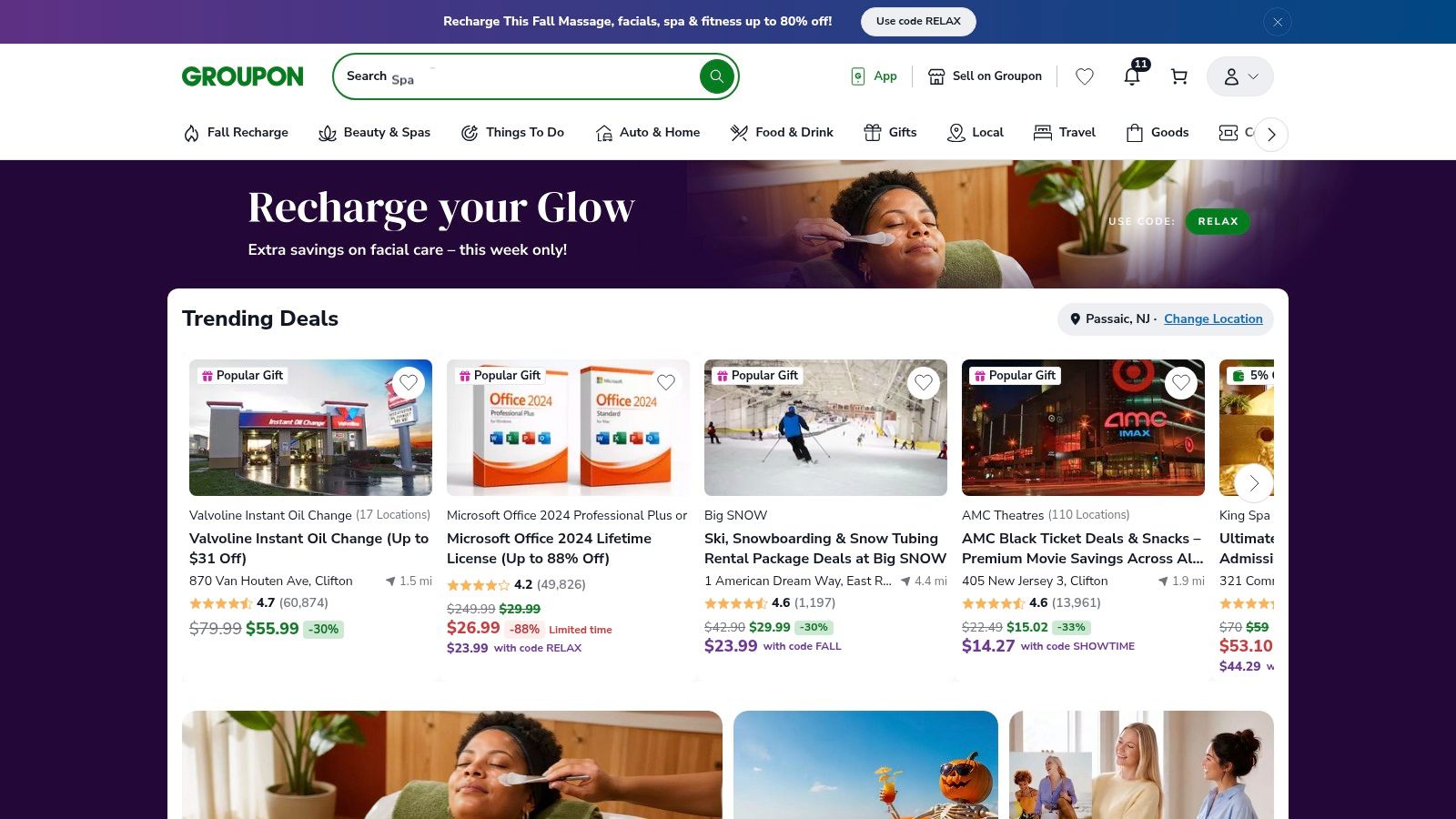
Groupon's review counts, popularity indicators, and merchant information help you assess an unfamiliar business quickly. That matters for local flavor deals because the cheapest offer isn't automatically the best neighborhood experience. Read the full terms before buying. Some vouchers carry restrictions around dates, minimum purchases, appointment rules, or participating locations, and merchant acceptance can vary.
<a id="choose-groupon-for-breadth"></a>
Choose Groupon for breadth
Groupon is better than a hyperlocal feed when you want to compare many possibilities in a major metro. It's less efficient when you need a live offer directly along your current route and don't have time to study each listing.
Pros: Large selection, mobile redemption for many offers, city-level and neighborhood-level filtering, reviews, and popularity signals.
Cons: Redemption terms vary widely. Refund windows and merchant acceptance deserve careful attention.
For a broader workflow that combines marketplace browsing with nearby discovery, see this guide to deal finder apps. Use Groupon when you want category breadth, then verify the actual venue and redemption rules before paying.
<a id="3-travelzoo-local-deals"></a>
3. Travelzoo Local Deals
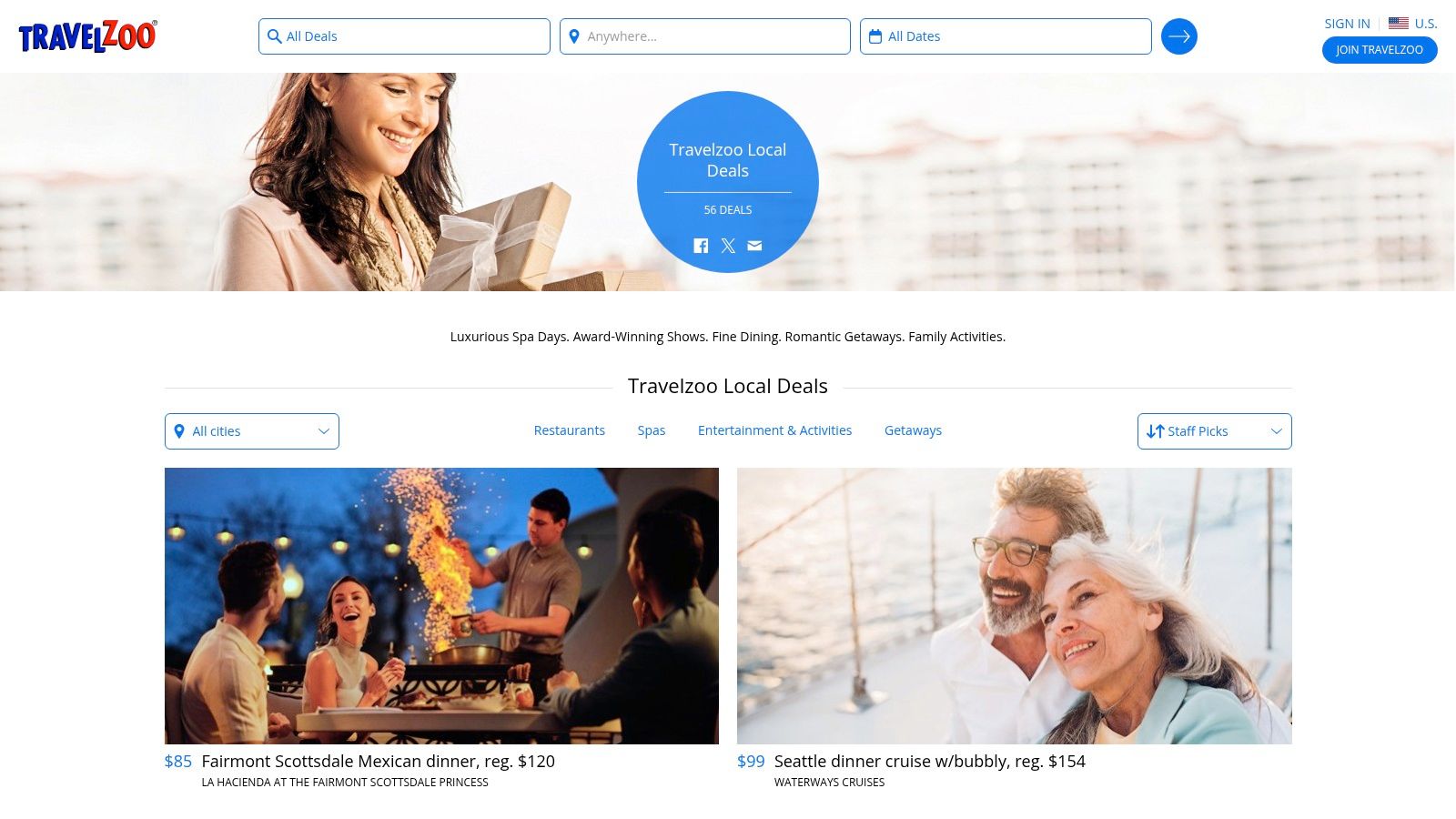
Travelzoo is the pick for a planned local experience with a stronger editorial filter. Its Local Deals and Things to Do sections cover dining, spas, attractions, and entertainment, with regional browsing that helps you build a weekend plan or choose an experience as a gift.
The platform's main advantage is curation. Offers generally include a clear validity window, redemption instructions, and details about what the purchase includes. Some listings add negotiated extras, flexible booking options, or change policies, which can matter more than a headline discount when your schedule is uncertain.
<a id="use-it-for-a-meal-or-outing-you-can-plan"></a>
Use it for a meal or outing you can plan
Travelzoo isn't the first place to check for a spontaneous stop two blocks away. Its local inventory is smaller than a mass marketplace, and some deals are restricted to specific dates, times, or capacity limits. That makes the service a better fit for planning than for urgent route decisions.
Open the offer page before purchasing and confirm the validity period, booking process, blackout dates, and any required reservation. If you're buying for someone else, check whether the recipient can use the deal without the purchaser present.
Pros: Hand-picked offers, clear instructions, useful regional filters, and occasional bonus value.
Cons: Smaller day-to-day inventory, date restrictions, and capacity limits on some experiences.
Travelzoo works best when the local character of the experience matters and you have enough time to plan around the offer.
<a id="4-restaurantcom"></a>
4. Restaurant.com
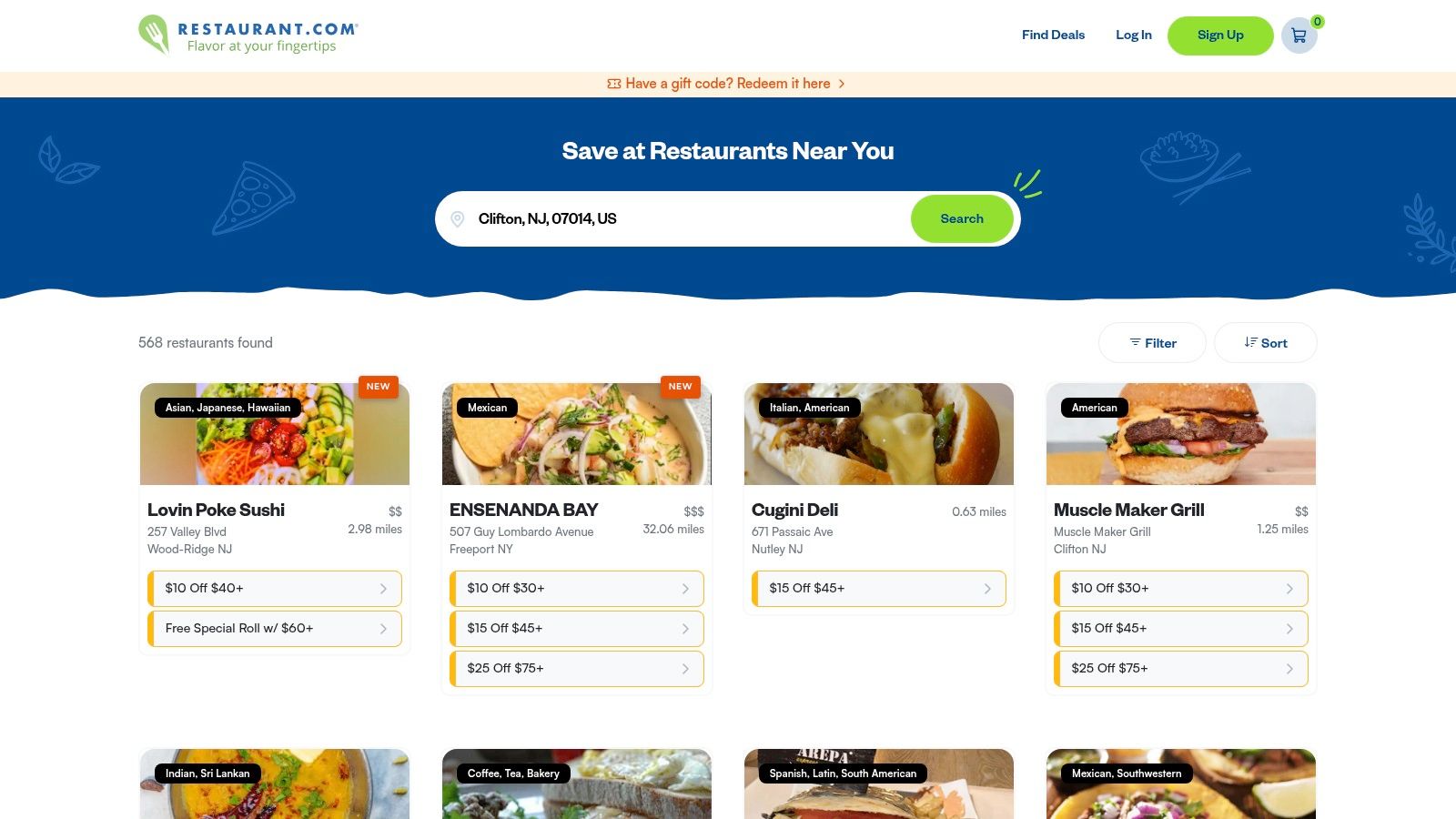
Restaurant.com suits budget-minded diners who are comfortable planning around merchant terms. The platform sells discount dining certificates in multiple denominations. A common example is paying $10 for a $25 certificate, as described in the offer model provided for the service, but each listing's terms control the actual redemption.
The directory covers participating local restaurants across cities and cuisines. That makes it useful for a family meal, a group dinner, or a planned neighborhood restaurant visit where you already know the general area and can accept restrictions.
<a id="read-the-certificate-before-choosing-the-restaurant"></a>
Read the certificate before choosing the restaurant
Restaurant certificates often include minimum-spend requirements and day or time restrictions. Check whether the certificate applies to dine-in service, whether it excludes alcohol or special events, and whether the restaurant accepts it during your intended visit. A low purchase price won't help if the terms don't fit your meal.
The ability to exchange certificates if plans change reduces some of the risk, but it doesn't remove the need to confirm the replacement rules. Search by neighborhood first, then compare cuisine, distance, validity, and restrictions rather than selecting solely by certificate value.
Pros: Fixed-value savings, a searchable local restaurant directory, multiple certificate denominations, and an exchange option if plans change.
Cons: Minimum spend and day or time limitations are common. Restaurant participation varies by city and cuisine.
Use this guide to local restaurant coupons when you want to compare certificate-based savings with map-first restaurant discovery.
<a id="5-nextdoor-local-deals"></a>
5. Nextdoor Local Deals
Nextdoor is the most neighborhood-native option on this list. Local businesses can promote offers through neighborhood feeds, business pages, and email digests, giving you access to small shops, service providers, restaurants, and other businesses that may not appear prominently on national coupon marketplaces.
That proximity is the appeal. A neighborhood feed can surface a nearby salon opening, home-service promotion, local restaurant offer, or small-shop sale without requiring you to search across a broad city directory. Business verification and integrated messaging also make it easier to ask a quick question before committing.
<a id="search-the-feed-with-a-specific-need"></a>
Search the feed with a specific need
Nextdoor works best when you know the kind of local business you want. Look for a service, shop, or restaurant near your neighborhood, then check the post date, location, expiration details, and whether the offer is still available. Message the business when the terms aren't clear.
The tradeoff is consistency. Inventory depends on which merchants choose to promote themselves, so coverage can be hit-or-miss by area. Busy community feeds can also bury a useful offer beneath unrelated posts.
Pros: Strong neighborhood signal, local-business exposure, feed and digest visibility, business pages, verification, and direct messaging.
Cons: Merchant participation determines coverage. Community noise can make urgent deals difficult to find.
Choose Nextdoor for authentic neighborhood services and small businesses. Choose AIR.POG when you need a map-centered answer to what's closest along your route.
<a id="6-rakuten-in-store-cash-back"></a>
6. Rakuten In-Store Cash Back
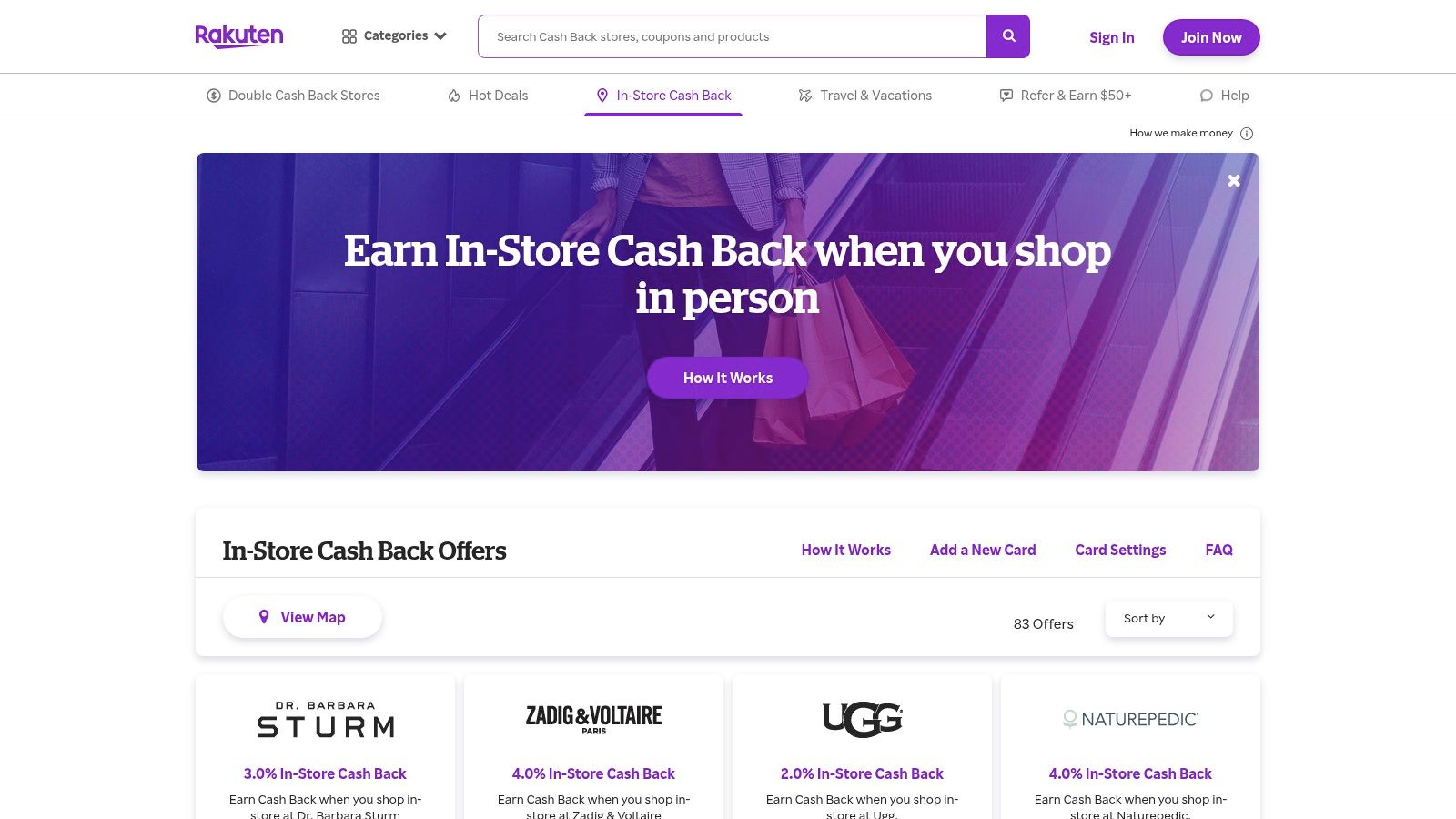
Rakuten is built for recurring savings during ordinary errands rather than one-off voucher hunts. Its In-Store area shows participating nearby retailers and restaurants. You add an offer, pay in person with a linked card, and qualifying cashback can post to your Rakuten account without presenting a separate coupon at checkout.
That structure removes a major source of redemption friction. Once the offer is added and the correct card is used, you don't need to remember a voucher code or explain a certificate to the cashier. Rakuten can also combine in-store activity with online or in-app offers, depending on the promotion.
<a id="add-the-offer-before-leaving"></a>
Add the offer before leaving
Rakuten's main failure point is preparation. You must proactively add the offer before purchasing, and some offers reset after use. Local coverage varies, and in-store rates can be lower than online rates, so compare the actual terms before changing your shopping plan.
This is a strong companion to a map-first tool. Use a map to choose the most practical store, then use Rakuten to capture passive savings during the errand. Don't drive farther solely for cashback unless the route and purchase already make sense.
Pros: Set-and-forget savings after setup, no voucher presentation, useful for recurring errands, and compatibility with other Rakuten deal channels.
Cons: Offers must be added before purchase. Some reset after use, coverage varies, and in-store rates may differ from online rates.
Read this comparison of coupon apps before building a routine around card-linked rewards.
<a id="7-todaytix-including-goldstar-inventory"></a>
7. TodayTix Including Goldstar Inventory
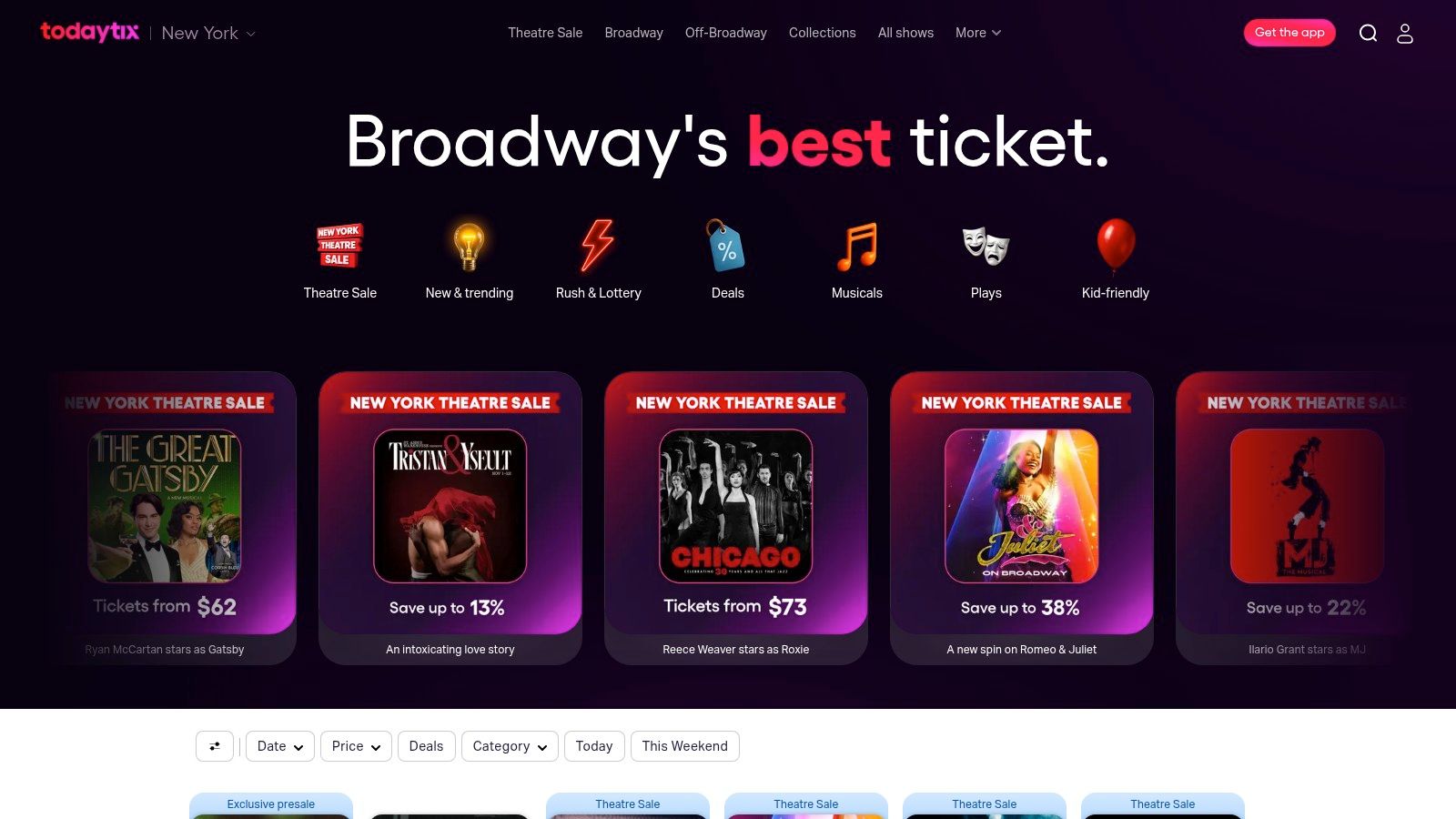
TodayTix is the clear choice for local theater, comedy, concerts, and other live experiences. It provides city-specific event discovery, regular promotions, rush and lottery options, and mobile ticketing through event pages that show seat maps and fees before checkout. In many markets, its inventory also includes Goldstar offerings.
Use TodayTix when the deal itself is tied to a particular performance or event window. Rush and lottery options can help last-minute attendees, while the Red, Silver, and Gold rewards tiers offer benefits and occasional extra discounts for frequent event-goers.
<a id="compare-the-venue-before-checkout"></a>
Compare the venue before checkout
TodayTix makes ticket discovery and mobile purchase straightforward, but availability and pricing vary by city, show, and date. Some sale prices may match promotions run directly by the venue, so compare the final total and seating options before purchasing. Fees disclosed at checkout should be part of your comparison, not an afterthought.
The service is strongest for people who want local entertainment without visiting several venue websites. It's less useful for general neighborhood shopping or a meal that needs to happen immediately.
Pros: Strong live-event coverage, city-specific browsing, rush and lottery options, mobile tickets, seat maps, disclosed fees, and rewards benefits.
Cons: Inventory and discounts vary by market and date. Venue-run promotions may offer a comparable price.
Choose TodayTix when the neighborhood experience is a show, concert, comedy set, or attraction with a fixed time.
<a id="7-platform-local-deals-comparison"></a>
7-Platform Local Deals Comparison
| Service | Implementation complexity 🔄 | Resource requirements ⚡ | Expected outcomes ⭐📊 | Ideal use cases 💡 | Key advantages ⭐ | |---|---:|---:|---|---|---| | AIR.POG | Low, install-free PWA, map-first UI, minimal setup | Low device/storage; requires location and merchant postings | Immediate, proximity-first discovers and one-tap routing for time‑sensitive deals | Drivers, commuters, travelers, on-the-go bargain hunters | Tap-to-route, drive-optimized UI, POGZILLA auto-scouting, map-centric discovery | | Groupon | Medium, account + purchase flow; read redemption terms | Moderate, app/account, voucher management | Large selection and deep time-bound discounts in many metros | Planned purchases for dining, activities, services | Massive inventory, instant mobile vouchers, robust review signals | | Travelzoo – Local Deals | Low, browse curated lists; booking follows clear instructions | Low–moderate, account for bookings; editorial curation | Curated, vetted offers with negotiated perks and clear validity windows | Weekend plans, gifts, curated local experiences | Hand-picked deals, negotiated extras, clear redemption details | | Restaurant.com | Low, buy certificates and redeem per merchant rules | Low, certificate purchase and planning ahead | Predictable fixed-value savings for dining groups and pre-planned meals | Budget-minded diners, families or groups planning meals | Fixed-value certificates, large directory, flexible exchange policy | | Nextdoor – Local Deals | Low, integrated into neighborhood feed, simple posting | Low, community-driven; businesses must post offers | Hyperlocal, timely offers from nearby small businesses (variable quantity) | Finding local services, small shops, neighborhood promotions | Strong neighborhood signal, business messaging and verification | | Rakuten – In-Store Cash Back | Low–Medium, link card and add offers before purchase | Low, card-linking via app; no voucher handling | Passive, recurring cash back posted to account; modest long-term savings | Routine errands and dining when offers exist | Set-and-forget cash back, complements other deal apps | | TodayTix (incl. Goldstar) | Low, browse city events and purchase mobile tickets | Low–moderate, account for mobile ticketing; optional rewards | Discounted and last-minute event tickets; rewards perks for frequent users | Local theater, comedy, concerts, last-minute ticket seekers | Strong live-event coverage, rush/lottery options, mobile ticketing and rewards |
<a id="turn-a-nearby-find-into-a-better-plan"></a>
Turn a Nearby Find Into a Better Plan
Start with the map when proximity and timing matter. AIR.POG is the direct choice for scanning live local flavor deals around your current location, a selected city, or a route. Its map-first approach fits commuters, travelers, families running errands, students, and bargain hunters who need a nearby answer rather than a long catalog.
Use a curated marketplace when you want breadth or editorial filtering. Groupon gives you wide category coverage, while Travelzoo is better for hand-picked dining, spa, attraction, and entertainment experiences. Use Restaurant.com when a fixed-value dining certificate fits your plans and you're willing to work within merchant restrictions. Nextdoor makes more sense for small neighborhood businesses and services that rely on local feeds.
Card-linked cashback belongs in a different part of the routine. Rakuten is useful for recurring errands because it can reduce voucher handling, but you must add the offer before purchase and confirm that the participating location fits your route. TodayTix is the specialist option for local live entertainment, especially when rush, lottery, or rewards benefits influence the decision.
Before acting on any offer, verify five details:
- Location: Confirm the exact venue, not just the neighborhood name.
- Validity: Check the expiration date, event date, booking window, and blackout periods.
- Minimum spend: Look for required purchases, group limits, or certificate thresholds.
- Redemption method: Know whether you need a mobile voucher, certificate, linked card, booking confirmation, or ticket.
- Route: Decide whether the savings justify the extra stop, parking, travel time, or change in plans.
Consumers already use several channels to find local businesses. Recent discovery research reports that 58% start with traditional search, 14% with maps, 11% by voice, 8% with AI tools, and 1% through social media in GatherUp's 2025 local discovery data. The practical lesson is to match the channel to the situation. Search helps you investigate, feeds show what's being promoted, and maps tell you whether the offer is close enough to use.
AIR.POG keeps that final decision lightweight. Scan nearby opportunities, review POG REELS for fast examples, adjust the radius when the first results are too narrow or too broad, and route to the chosen venue after you've checked the details. Don't interact with deal tools while driving. Set your destination before moving, or pull over first.
AIR.POG puts live nearby promotions, map-first discovery, POG REELS, adjustable radius scanning, and tap-to-route guidance in one lightweight progressive web app. For neighborhood meals, errands, events, and local specialties, visit AIR.POG and find an offer that fits your route before you commit.
Spread the word — every share brings more POG'rs to the map. 🎯
Got a story or tip?