 For Everyone
Best Tire Deals Near Me and How to Spot Real Savings
by AIR.POG Team
Your tire light came on, the tread looks sketchy, or inspection just failed you. So you pull out your phone, search best tire deals near me, and get buried under coupon pages that tell you almost nothing useful. A flashy rebate. A “starting at” price. Maybe a chain store ad with tiny fine print. What you need is simple: who nearby can put the right tires on your car today, and what's the total when you're standing at the counter.
That's where most tire shopping goes sideways.
I've looked at enough tire quotes to tell you this straight. The cheapest listed tire often isn't the cheapest drivable deal. The shop five minutes away may cost more than the one fifteen minutes away after price matching. The “free installation” angle can still leave you paying for disposal, valve stems, optional add-ons, and other line items that suddenly make the deal look ordinary.
A good tire deal has three parts. It fits your car, the shop can install it soon, and the out-the-door total holds up when all fees hit the invoice. That's the frame I'd use if I needed tires today.
Table of Contents
- Why Finding the Best Tire Deals Near You Feels Harder Than It Should
- What Best Tire Deals Near Me Really Means Today
- Comparing Where to Buy Tires Near You
- How to Read the Out the Door Price Before You Drive Over
- Using a Map to Find and Verify Live Tire Deals Around You
- When to Buy and How Promos Change Nearby Savings
- Choosing the Right Tire Deal for Your Situation
<a id="why-finding-the-best-tire-deals-near-you-feels-harder-than-it-should"></a>
Why Finding the Best Tire Deals Near You Feels Harder Than It Should
You'd think this would be easy. Tires are common, local, and heavily advertised. But most search results still push you toward generic coupon lists instead of clear local answers.
<a id="the-problem-with-coupon-first-search"></a>
The problem with coupon-first search
Say you've got a slow leak on a Wednesday morning. You need to get to work, pick up kids, or make a weekend trip. You search local deals and start seeing the usual mess: rebate headlines, chain promotions, warehouse club listings, and dealership service specials. Half of them don't show installation. Some don't tell you whether the tire is in stock. A few make you click through three pages before you even know if your tire size qualifies.
That's why this feels harder than it should.
The question isn't “Who has a coupon?” It's “Which nearby shop gives me the best installed value within a distance I'm willing to drive?” That's a map problem, not a list problem.
Practical rule: Ignore the first advertised number until you know the full installed total and whether the tire is actually available nearby.
<a id="why-local-radius-matters-more-than-the-headline"></a>
Why local radius matters more than the headline
A tire deal only counts if you can use it without wasting half your day. If one store is ten minutes away and another is forty, the farther shop needs to beat the closer one by enough to matter. Sometimes it does. Sometimes it doesn't. The point is to compare local options by radius, not by whoever bought the top search placement.
A nearby deal also changes based on urgency. If you need one damaged tire replaced today, speed matters. If you're replacing all four next week, you've got room to negotiate. You can widen your search area, compare bundled installation, and ask one store to match another.
That's the difference between an advertised price and a real local win. One lives in a banner ad. The other survives contact with the invoice.
<a id="what-best-tire-deals-near-me-really-means-today"></a>
What Best Tire Deals Near Me Really Means Today
Most drivers still treat this search like a bargain-bin hunt. It isn't. It's a location-plus-value decision.
The replacement tire business is enormous. In the U.S. replacement tire market, total value reached $57 billion in 2023, with passenger tires at $37.6 billion, light truck tires at $8.5 billion, and commercial truck tires at $8.4 billion. Passenger tires also held the largest retail channel share at 28.5% in 2023, which tells you tire shopping is a recurring consumer purchase, not some rare one-off event (National Academies market data).
That scale creates competition in almost every metro and suburban area. Good. It also creates noise. Not good.
<a id="the-three-lenses-that-matter"></a>
The three lenses that matter
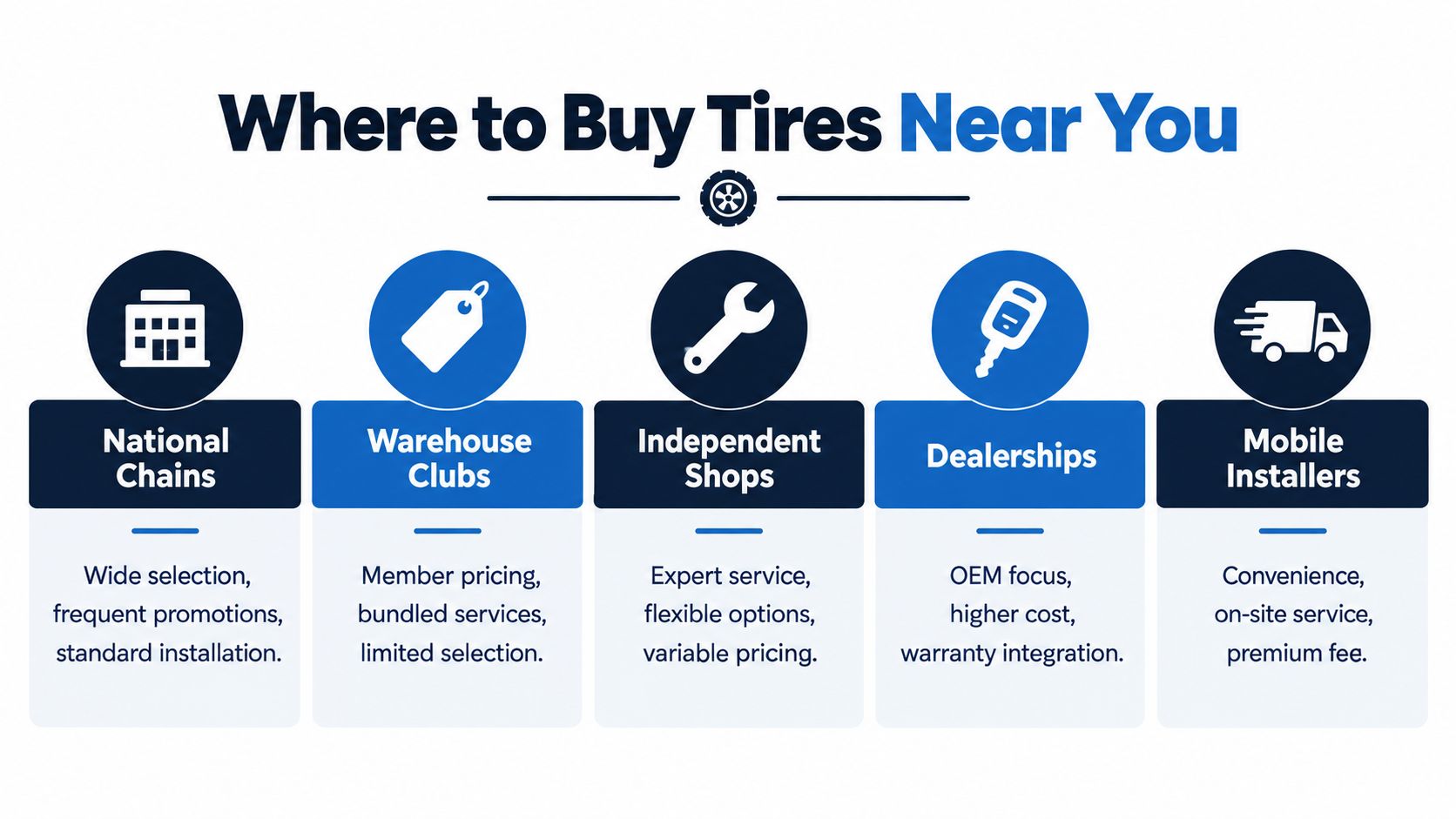
When I compare tire deals, I use three filters.
- Tire price: This is the shelf number. It's useful, but it's only the starting point.
- Installed cost: This is the shopping number. It includes mounting, balancing, disposal, and whatever else gets added before checkout.
- Verified performance: This separates a cheap tire from a smart buy.
That last part gets ignored too often. Independent testing shows real trade-offs between wet grip and efficiency. In a 2024 all-season and winter comparison, the best wet-braking tire stopped in 48.9 m while the worst needed 53.7 m, a 4.8 m gap. Rolling resistance ranged from 6.58 kg/t to 8.45 kg/t, a 28.4% spread (independent tire test results).
<a id="cheap-can-cost-more"></a>
Cheap can cost more
If two nearby stores have similar installed totals, don't automatically pick the lower-tier tire. A tire with better wet braking gives you more margin in rain. A tire with lower rolling resistance may save fuel over time. I'm not saying every driver needs the premium option. I'm saying sticker price alone is lazy shopping.
A smart local tire deal balances what you pay today with what the tire costs you in safety, fuel use, and replacement regret later.
That's what best tire deals near me means now. Not the loudest coupon. The best local combination of distance, installed total, and proven tire performance.
<a id="comparing-where-to-buy-tires-near-you"></a>
Comparing Where to Buy Tires Near You
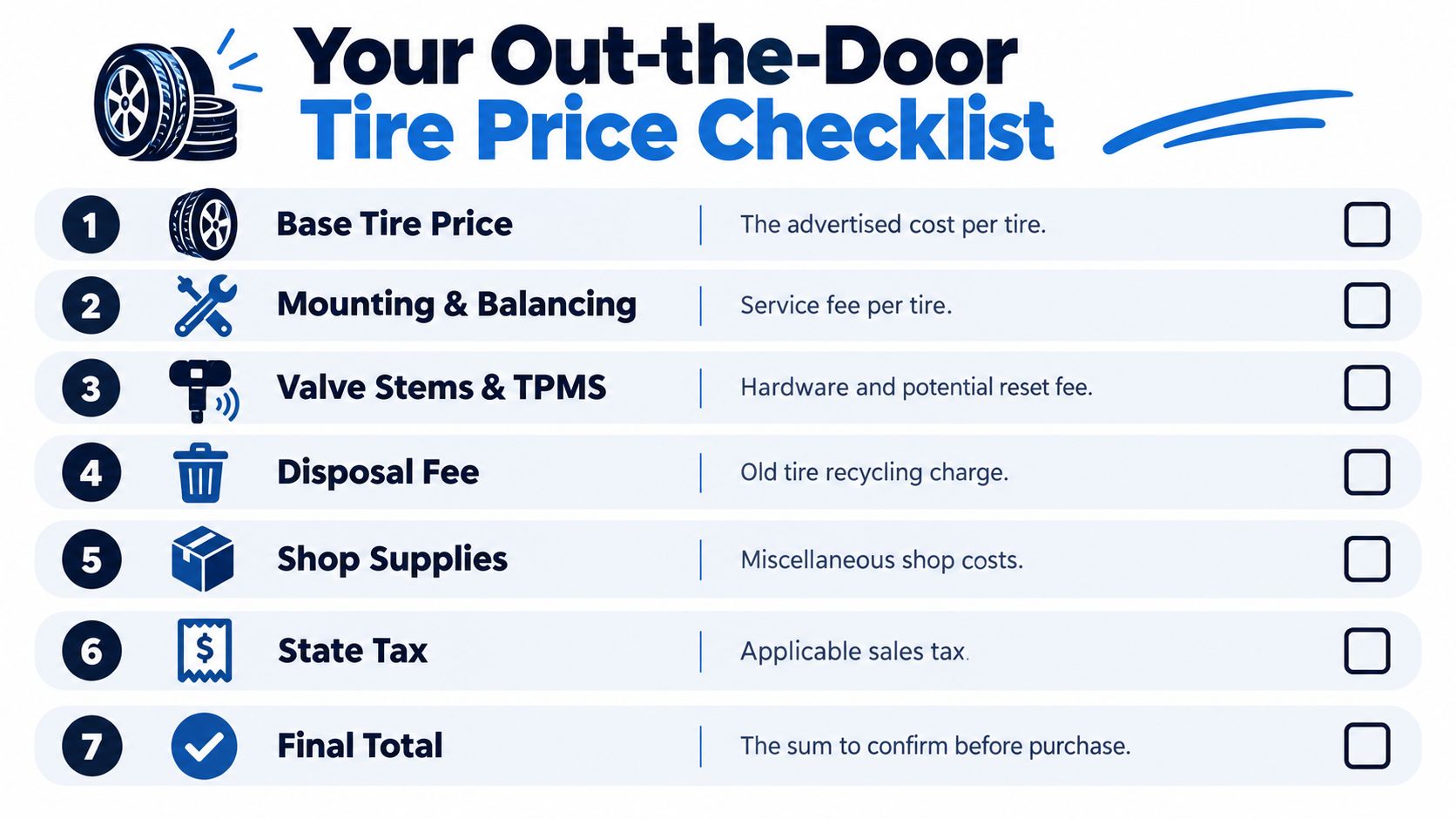
Here's the fast version. Different shop types win in different situations. If you compare them on the stuff that matters, the picture gets clearer fast.
| Shop Type | Best For | Price Pattern | Install and Extras | Watch Out For | |---|---|---|---|---| | National Chains | Planned replacements, broad brand shopping | Frequent promotions and rebates | Usually standardized packages | Upsells and inconsistent final totals | | Warehouse Clubs | Value shoppers already paying membership | Strong bundled pricing on some sets | Often includes more services in the package | Limited brands, appointment bottlenecks | | Independent Shops | Local service and quote flexibility | Can vary a lot by shop | Often more willing to customize options | Bundle details may differ quote to quote | | Dealerships | OEM-focused buyers and newer vehicles | Usually higher | Warranty and brand integration can be cleaner | Higher base pricing | | Mobile Installers | Convenience-first buyers | Premium convenience pricing | On-site install saves time | Fewer same-day tire choices, service area limits |
<a id="local-tire-shop-types-compared-on-what-actually-matters"></a>
Local Tire Shop Types Compared on What Actually Matters
National chains are usually the easiest place to start. They have broader inventory, regular manufacturer promotions, and a process that's familiar. If you want quick apples-to-apples shopping, chains make that easier.
Warehouse clubs can beat chains when the bundle is strong and the tire you want is in stock. They're especially good for shoppers who already have a membership and aren't picky about broad brand access.
Independent shops are where some of the best real-world wins happen. Not because they always list the lowest number online, but because they'll sometimes work with you on matching, package adjustments, or practical recommendations instead of pushing a script.
If a chain gives you the tire and an independent gives you the same tire plus a cleaner installed quote, the independent just won. Don't overthink it.
Dealerships make sense when you want original-equipment alignment with your vehicle brand, or when you're rolling tire service into other dealer maintenance. But if price is your top priority, dealer quotes often need a hard comparison.
Mobile installers are for people buying back time. Great if convenience is worth paying for. Not great if your only goal is the lowest total.
<a id="the-same-tire-can-have-wildly-different-local-prices"></a>
The same tire can have wildly different local prices
This isn't theory. Consumers' Checkbook found Bridgestone Alenza Sport tires for a Toyota Highlander ranged from $930 at Costco to $1,622 at Westside Tire, a difference of $692 for the same set (Consumers' Checkbook price comparison).
That's why checking one quote is a mistake.
<a id="who-to-use-based-on-the-job"></a>
Who to use based on the job
- Need tires today: Start with chains and independents nearby. They're usually the best shot for same-day movement.
- Replacing all four and planning ahead: Check clubs, chains, and independents side by side.
- Want the fastest route from search to store: Use a map-first tool so you can compare nearby options by distance and route, not just list order. A location-aware finder like AIR.POG's deal discovery app fits this workflow because it centers discovery around nearby offers rather than static coupon pages.
<a id="what-id-do-first"></a>
What I'd do first
Call or message two close stores and one slightly farther store. Ask for the exact tire, the installed total, and whether they'll match another quote. That simple move catches most of the overpriced options before you ever leave the driveway.
<a id="how-to-read-the-out-the-door-price-before-you-drive-over"></a>
How to Read the Out the Door Price Before You Drive Over
The ad says one thing. The invoice says another. If you don't ask for an itemized installed quote, you're shopping blind.
<a id="what-should-already-be-in-the-quote"></a>
What should already be in the quote
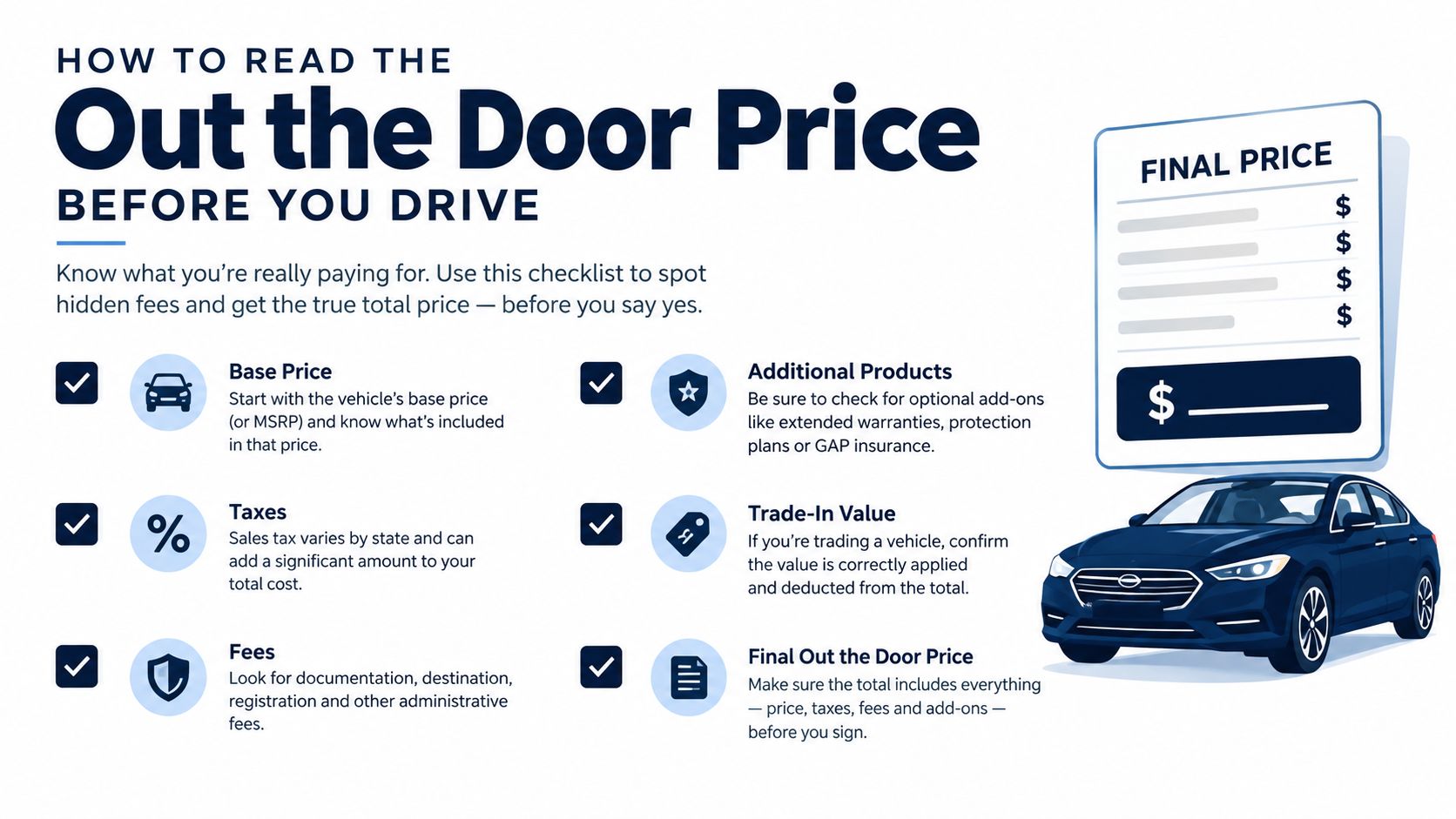
A standard installation package typically includes mounting, balancing, a new rubber valve stem, and old-tire disposal, while road hazard protection and TPMS sensor rebuild kits are usually optional add-ons (independent installation guide).
That means the first question isn't “What's the tire price?” It's “What does your installed quote include?”
Here's what I want in writing before I drive anywhere:
- The exact tire model and size
- Installation line items including mounting and balancing
- Disposal and hardware details like valve stems or sensor-related parts
- Optional protections listed separately, not buried in the total
- Tax included or clearly separated
<a id="the-fees-that-quietly-change-the-deal"></a>
The fees that quietly change the deal
Road hazard coverage deserves special attention. Many buyers assume it's part of the manufacturer warranty. Usually it isn't. A consumer warranty guide notes that most manufacturers do not include road hazard coverage in their standard warranty, and retailers like Costco, Discount Tire, and Tire Rack may offer their own separate programs with different terms (tire warranty guide).
That doesn't mean road hazard coverage is bad. It means you should treat it like an add-on decision, not a default yes.
Then there's the negotiation gap. Consumer Reports says shoppers who negotiate or price-match can save a median of $37 per tire, and more than half saved $100 or more (Consumer Reports money-saving guidance).
Ask this exact question: “If I have a competing installed quote on the same tire, will you match it or get close?”
That one sentence saves people money because many stores would rather trim margin than lose the sale.
<a id="dont-skip-performance-data"></a>
Don't skip performance data
Price is only half the job. If a shop can't point you to standardized testing, don't assume the cheaper tire is a better buy. Consumer Reports' protocol uses wet braking from 60 to 0 mph on a wet lane with about 1 mm of water, ABS enabled, and at least three stops. It also evaluates handling, hydroplane resistance, noise, ride comfort, rolling resistance, and tread life. ISO-based studies also measure rolling resistance and wet braking under controlled conditions (standardized tire testing overview).
Use local offer tools to gather the shop options, then confirm the quote details before you move. If you want nearby promotions in a location-first format instead of old-school coupon pages, location-based coupon discovery is the right model.
<a id="using-a-map-to-find-and-verify-live-tire-deals-around-you"></a>
Using a Map to Find and Verify Live Tire Deals Around You
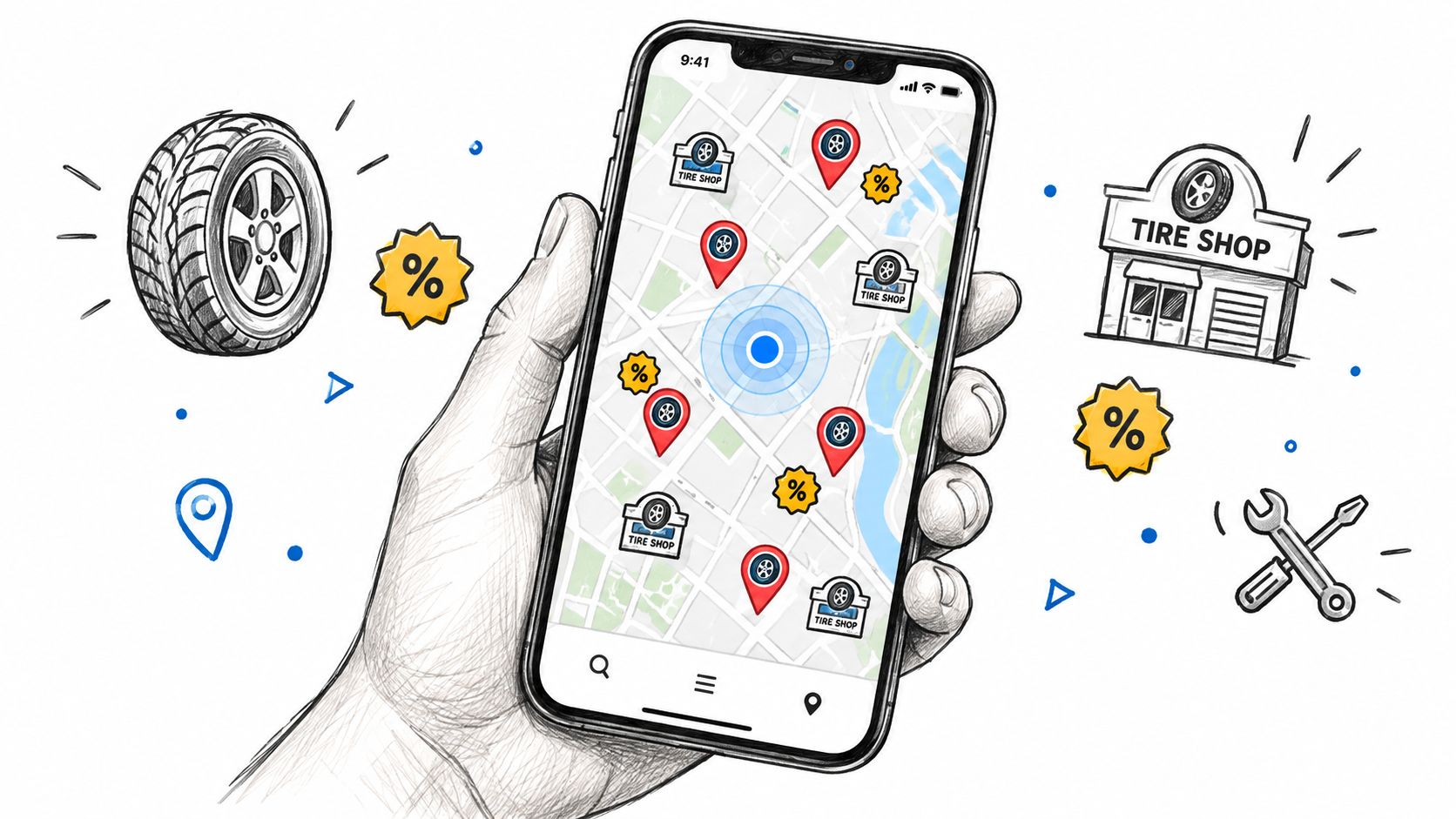
Most tire shoppers still do this backward. They scroll a list, open a bunch of tabs, and then figure out whether any of those stores are practical to visit. Start with the map instead.
<a id="the-fast-workflow-that-saves-time"></a>
The fast workflow that saves time
Center the map on your current location or the city where you need service. Then widen or tighten the search radius based on urgency. If you've got a slow leak and need help today, stay tight. If you're replacing a full set and can plan, widen the radius and see who falls into striking distance.
Then do three things:
- Tap the nearest likely fit and check whether the offer is current.
- Open routing so you know the drive, not just the map pin.
- Verify the details before leaving, especially tire model, install availability, and total quote.
That beats scrolling generic “top ten tire deals” articles that know nothing about where you are.
<a id="match-the-map-to-your-situation"></a>
Match the map to your situation
If you commute daily and one tire keeps losing air, proximity wins. You need a practical stop, not a research project.
If you're traveling in an unfamiliar city, map-first search matters even more. You don't know the local shop names, and static coupon pages won't tell you what's near your route.
If you're doing weekend errands for the family, widen the radius a bit. A slightly farther stop can make sense if it pairs with groceries, warehouse shopping, or another planned trip.
The right deal isn't always the closest pin. It's the nearest shop that can prove the tire, the timing, and the installed total all make sense.
A tool built around this habit should let you scan nearby offers, adjust distance, route in one tap, and check live deal details without a lot of friction. That's the whole appeal of using a live local deal map instead of static coupon lists.
<a id="when-to-buy-and-how-promos-change-nearby-savings"></a>
When to Buy and How Promos Change Nearby Savings
Timing matters more than most buyers think. Tire prices move, promotions have windows, and local inventory shifts can make one week better than the next.
<a id="promo-windows-are-real-and-strict"></a>
Promo windows are real and strict
Manufacturer promotions often come with a purchase window and set-size rules. Goodyear's current rebate offer is valid on purchases made from September 1, 2026 through November 30, 2026, and another Goodyear and Just Tires promotion offered $100 off installation on select sets of 4 tires with a purchase deadline of October 3, 2026 (Goodyear rebate details).
If you miss the deadline, the math changes. If you only need one or two tires, some promotions won't help you at all.
<a id="prices-arent-static"></a>
Prices aren't static
Independent industry reporting says 2024 saw the first measurable decline in advertised tire prices since the post-COVID surge, while market trackers and tariff-focused analyses in 2025 and 2026 show ongoing month-to-month movement in the U.S. and Europe (industry pricing report).
That means a nearby deal today may not be the best nearby deal next week. If your tires are safe enough to wait a short time, checking a slightly wider radius during a live promo window can pay off.
<a id="my-timing-rules"></a>
My timing rules
If you need tires today, don't get cute. Buy based on installed total, availability, and a tire you trust.
If you can wait a bit, use these rules:
- Watch set-of-four promos: They tend to be the cleanest path to meaningful savings.
- Check a wider radius during active rebates: The nearest store isn't always the sharpest price.
- Read the deadline carefully: A promo isn't real if your appointment lands too late.
- Compare before seasonal rushes: When everyone is changing over at once, convenience gets more expensive.
Consumer tire pricing also remains high enough that shoppers compare hard. A Consumer Reports survey found members paid an estimated $212 per tire, with a median installation cost of $31 for those who paid for that service. Historical market data also shows how price-sensitive the category is, with the market reaching $31.2 billion in 2010 and $37.3 billion in 2011 after the recession, and earlier replacement tire prices declining by about 5% annually over two decades from the late 1920s (automotive aftermarket expenditure report).
The takeaway is simple. Tire buyers have always responded to price movement, and smart timing still matters.
<a id="choosing-the-right-tire-deal-for-your-situation"></a>
Choosing the Right Tire Deal for Your Situation
Don't shop all tire deals the same way. Your best move depends on how you drive.
<a id="my-direct-recommendations"></a>
My direct recommendations
For the budget commuter, chase the lowest installed cost on a tire with decent verified testing. Skip bloated add-ons. Ask for the itemized quote and push for a match.
For the safety-focused family driver, don't buy the cheapest unknown option if a better wet-braking tire is close in total price. Rain performance is worth paying for when the difference is reasonable.
For the performance-minded driver, prioritize tire behavior first and deal-hunt second. A discount on the wrong tire isn't a deal.
For the infrequent city driver, convenience can matter more than shaving every last dollar. If a nearby shop can install soon and the out-the-door total is fair, take the practical win.
<a id="the-final-decision-filter"></a>
The final decision filter
Use this quick checklist before you commit:
- Need it now: Choose the nearest reputable shop with the right tire and a clear installed quote.
- Replacing all four: Compare at least three local quotes, including one slightly farther away.
- Debating road hazard coverage: Buy it only if the terms make sense for your roads and driving habits.
- Looking at two similar prices: Pick the tire with better verified wet braking and efficiency signals.
- Seeing a flashy coupon: Ignore it until the full invoice proves the savings.
If you build the habit of checking the map, confirming the installed total, and pushing for a match, you'll make faster decisions and avoid the fake bargains that trap most tire buyers.
AIR.POG helps you find live nearby deals on a map, adjust your search radius, and route directly to the place that makes sense for your stop. If you're tired of scrolling generic coupon lists when you need tires, use AIR.POG to spot local offers in a faster, more practical way.
Spread the word — every share brings more POG'rs to the map. 🎯
Got a story or tip?