 For Everyone
Best Shop Local App Guide: Find Deals in 2026
by AIR.POG Team
You're driving home, hungry, and half-tempted to stop anywhere with a decent coffee sign. Or you're wandering a new neighborhood, phone in hand, trying not to waste time on places that looked good online but aren't nearby. A good shop local app should solve that fast, with live offers, clear routing, and less scrolling. The best tools do more than list businesses, they help you decide in the moment.
The category is bigger than a niche now. One market estimate put the global local deal and cashback app market at USD 4.12 billion in 2025, with a projection of USD 10.50 billion by 2034 and a 10.8% CAGR across the forecast period Intel Market Research. That growth matches how people already behave, since local shopping and mobile discovery are increasingly tied to immediate action.
Table of Contents
- 1. AIR.POG
- 2. Groupon
- 3. Yelp
- 4. RetailMeNot
- 5. Upside
- 6. Too Good To Go
- 7. Flashfood
- 8. Travelzoo Local Deals
- 9. Nextdoor Local Deals
- 10. Shop by Shopify
- Top 10 Shop-Local App Comparison
- Your Next Favorite Local Spot Is One Tap Away
<a id="1-airpog"></a>
1. AIR.POG
AIR.POG fits the moment when you are already out the door and do not want to sort through a pile of generic offers. It is a map-first Progressive Web App that puts live nearby deals on an interactive map, then sends you to them with one-tap routing. The current-location focus, adjustable scanning radius, and full-screen, app-like behavior make it especially useful for drivers, commuters, travelers, students, and bargain hunters who need quick answers instead of a feed that takes work to decode.
The biggest advantage is how much friction it cuts out. You can browse by map, open POG REELS for short highlights, dig through POG'ODEX, or ask Ask AIR.POG for help without bouncing between apps. The site also works well for motion-friendly use with a drive-focused UI, and that matters because the category's real weakness is usually distraction, not a lack of deals.
Practical rule: a local deal app only helps if it can answer “What's nearby, right now?” before you've passed the exit.
AIR.POG also takes a clear stance on trust. Its location note says it uses location only to show nearby deals and does not sell user data, and the experience is built around open map infrastructure with OpenStreetMap and CARTO credits. That makes it feel more like a lightweight field tool than a coupon warehouse.
Pros
- Real-time, proximity-driven discovery with live deals on an interactive map and one-tap routing
- PWA delivery that installs to the home screen without app-store friction
- Fast, lightweight launches for short decision windows
- Drive-focused UI with flows like POG REELS, POGZILLA, and POG'ODEX
- Privacy-forward messaging and open-map basemaps
- Community features that make deal hunting feel more interactive
Cons
- Coverage depends on merchant participation and local deal density
- PWA limitations can vary by device, especially for background behavior and push features
Website: AIR.POG
<a id="why-it-wins-on-the-move"></a>
Why it wins on the move
AIR.POG makes the most sense when your decision window is tiny. If you are crossing town, exploring an unfamiliar city, or trying to avoid parking twice, the map-first flow gives you a cleaner path from search to stop. It is the one tool in this list that feels designed around the question people ask on the road, not the search term they typed at home.
The mobile commerce backdrop supports that approach. A 2025 benchmark says 76.5% of U.S. smartphone users, about 164 million people, regularly use shopping apps, and 78% of consumers worldwide shop through mobile apps ElectroIQ. That same source reports users spend 201.8 minutes/month in shopping apps versus 10.9 minutes/month on mobile shopping websites, which points to app-based discovery still having the engagement edge.
If you want a shop local app that behaves like a navigation aid instead of a coupon archive, AIR.POG is the most modern fit here. It is the best pick for fast decisions, short errands, and live discovery that starts on the map and ends at the door.
For readers comparing food-specific deals, local restaurant coupons are a good place to see how nearby savings show up in practice.
<a id="2-groupon"></a>
2. Groupon
Groupon is the heavyweight in this space, and that still matters. It's strong when you want a broad mix of local discounts across dining, spas, activities, classes, and services, especially in bigger metros where merchants actively use it. The app is useful for bargain seekers who don't care whether the deal comes from a boutique, a salon, or a weekend activity, as long as it saves money.
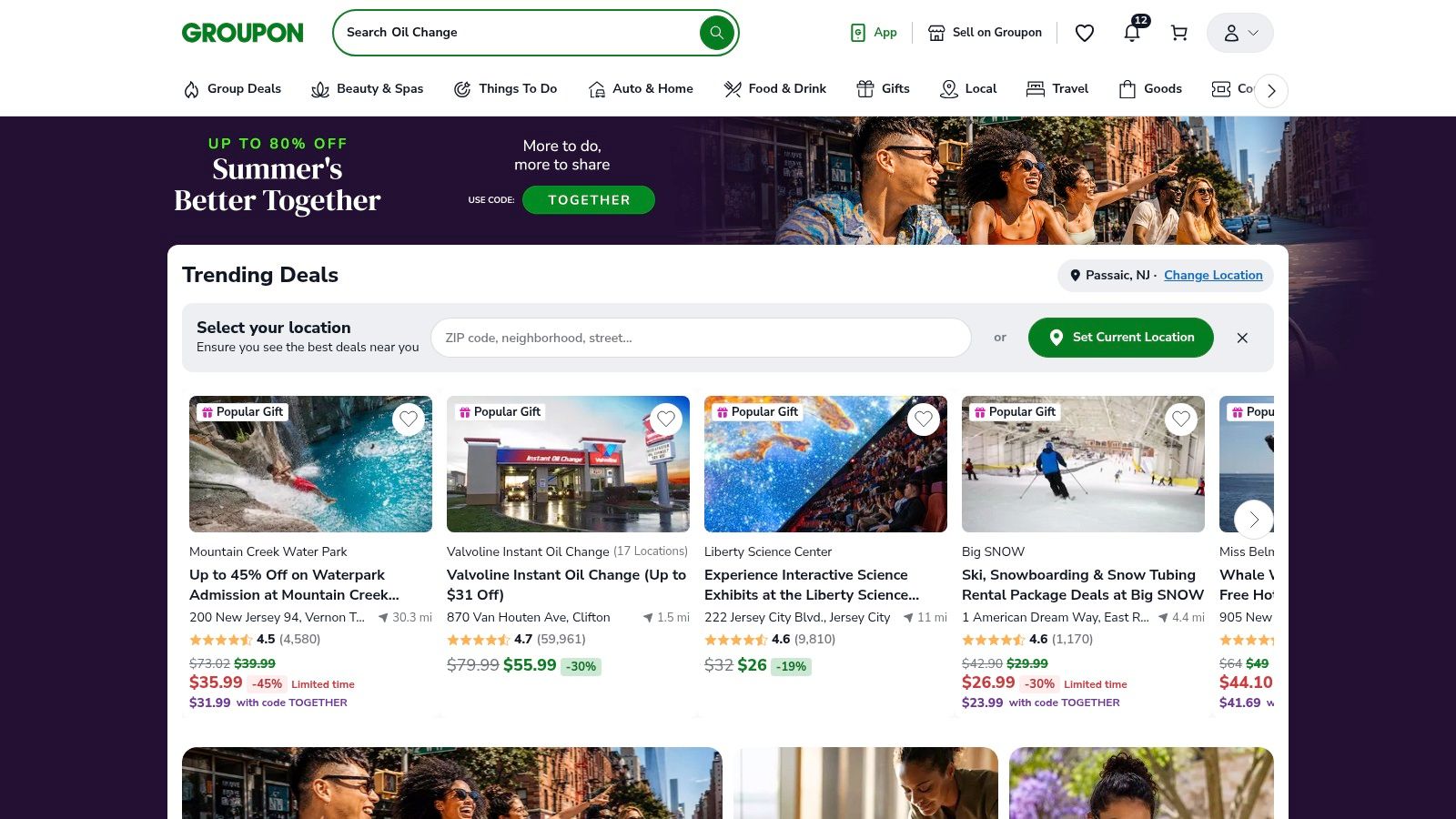
The trade-off is the old-school voucher flow. Groupon often gives you a better headline discount than most neighborhood apps, but the redemption process can add a few steps at checkout. That's fine when you're planning ahead. It's less ideal when you're already parked and want an instant yes or no.
A useful way to think about Groupon is breadth versus immediacy. It has broad category coverage and plenty of merchant choice, but the experience is built around browsing, selecting, and redeeming vouchers rather than hopping straight from discovery to arrival. For planned dining nights, birthday gifts, or activity bookings, that's a fair trade.
The public-facing deal ecosystem for local shopping also tends to split into two camps, static offer boards and fast, location-aware tools. Groupon sits closer to the former, which is why it remains strong for deliberate shopping but less compelling for in-motion use. If you're sitting on the couch and hunting for a deep discount, it's still one of the first apps to check.
Internal comparison note: how AIR.POG approaches deal discovery differently
<a id="3-yelp"></a>
3. Yelp
Yelp is still one of the most practical all-around apps for finding local businesses because it combines search, maps, filters, reviews, booking, and ordering in one place. That makes it useful when you care about more than price. If you're choosing between two sushi spots, trying to book a haircut, or checking whether a shop is open and active, Yelp gives you a lot of context before you leave the house.
The deal side is less central than discovery, but it's there. Businesses can post deals, gift certificates, and check-in offers, which means Yelp can sometimes surface an offer right where you're already evaluating a place. That's convenient, especially in categories where trust matters as much as savings.
One thing Yelp does well is keep discovery and action close together. You can search, read reviews, and in some categories reserve or message without leaving the app. That makes it a strong everyday utility for city shoppers who care about quality control.
The downside is that deal visibility depends heavily on each business and market. Yelp is great at showing you what's happening around you, but it isn't a dedicated savings engine. It can surface good local value, yet it won't always give you the fastest route from “I need something nearby” to “I'm on my way.”
The best Yelp use case is not bargain hunting first. It's decision-making first, with deals as a bonus.
Internal comparison note: local restaurant coupon discovery on AIR.POG
<a id="4-retailmenot"></a>
4. RetailMeNot
RetailMeNot works best when you want to squeeze extra value out of chain purchases, online checkout, or card-linked cash-back opportunities. It's less about neighborhood discovery and more about stacking savings through promo codes, coupons, and app-based cash-back offers. If you already know where you're shopping, it can help you lower the final bill.
That makes it strong for planned errands, especially when a national retailer or restaurant is involved. The upside is flexibility, because you can often combine one or more savings layers with loyalty rewards or credit-card benefits. For shoppers who like to optimize, that's a real advantage.
The catch is timing. Cash-back tracking and payout windows can take weeks, so RetailMeNot isn't the fastest reward experience in the market. It also depends on participation and card-link coverage, which means some local stores won't be as useful as larger chains.
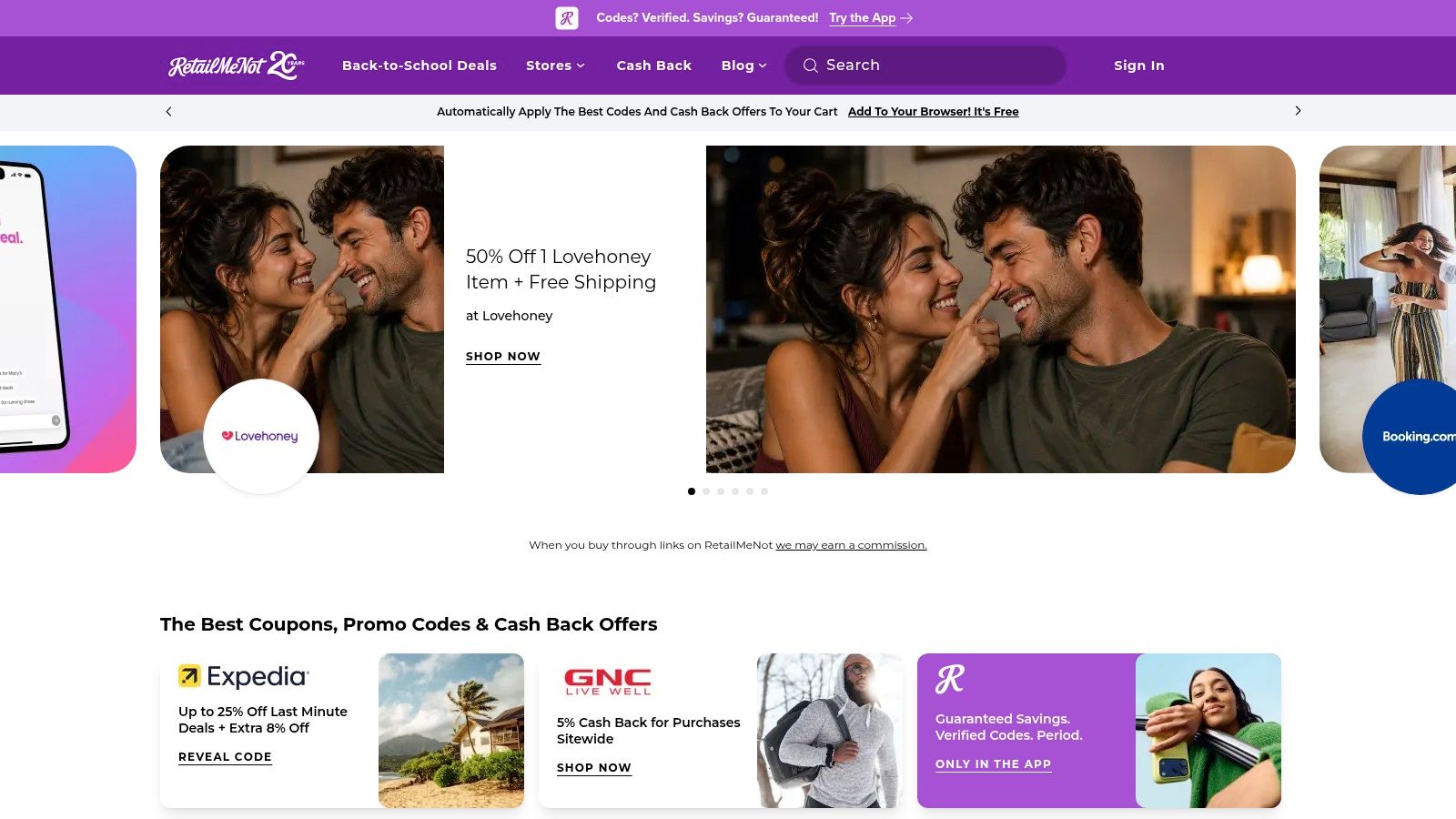
If you're the kind of shopper who checks codes before paying, this app belongs in your toolkit. If you want a nearby store to appear on a map and get routed to right away, it's not the strongest fit. RetailMeNot is a savings layer, not a discovery layer.
For local shopping, that difference matters. A good shop local app should shorten the path between finding and buying. RetailMeNot is strongest once the path already exists.
<a id="5-upside"></a>
5. Upside
Upside is one of the better picks for commuters and road trippers because it focuses on location-aware cash back at places people already stop, especially gas stations and restaurants. In some markets it also covers grocery and convenience stores, which makes it useful for errands that happen between destinations. The app's value is practical, not flashy, it rewards the kind of spending people can't avoid.
What I like about Upside is that it matches real travel behavior. You're already near fuel, food, or a convenience stop, and the app helps you check whether there's a reward worth claiming before you buy. That keeps the experience compact and timely.
The limitation is market variability. Grocery availability isn't universal, and the reward rates can change by location and user profile. That means you can't treat it as a fixed savings engine, you have to use it opportunistically.
Upside works best when you already know your route and want an immediate financial reason to choose one stop over another. It's less useful for browsing a whole city or discovering independent shops you didn't know existed. That's not a flaw, it's just a different job.
For everyday driving, Upside is a solid companion app. For exploration, it's narrower than a map-first local discovery tool.
<a id="6-too-good-to-go"></a>
6. Too Good To Go
Too Good To Go has a very specific appeal, and that's why people keep using it. It lets you buy discounted Surprise Bags of surplus food from nearby bakeries, restaurants, and grocers, usually at a steep discount compared with normal retail prices. If you're flexible and you like the idea of rescuing food that would otherwise go to waste, it's one of the smartest local food apps around.
The experience is simple, but the output is not guaranteed. You buy a bag, show up during the pickup window, and accept that the contents are a surprise. That unpredictability is part of the value proposition, and for many shoppers it's the fun part too.
The best use case is same-day food pickup when you don't need exact items. It's great for budget meals, bakery runs, or trying places you wouldn't normally visit. It can feel like a local treasure hunt, which is a rare quality in food shopping.
The downside is obvious. If you need specific ingredients, this isn't your app. And if your neighborhood has low supply, the options may be thin or gone quickly.
Use Too Good To Go when flexibility is a feature, not a compromise.
If your goal is to support local food businesses while saving money and reducing waste, it's hard to beat. If your goal is precise shopping, another app will fit better.
<a id="7-flashfood"></a>
7. Flashfood
Flashfood is one of the clearest examples of a grocery app built around real-world urgency. It lists near-expiry or overstock items from participating stores at steep discounts, then lets you buy in-app and pick up at a designated Flashfood Zone. For shoppers who already know they're heading to the store, that makes savings easy to capture.
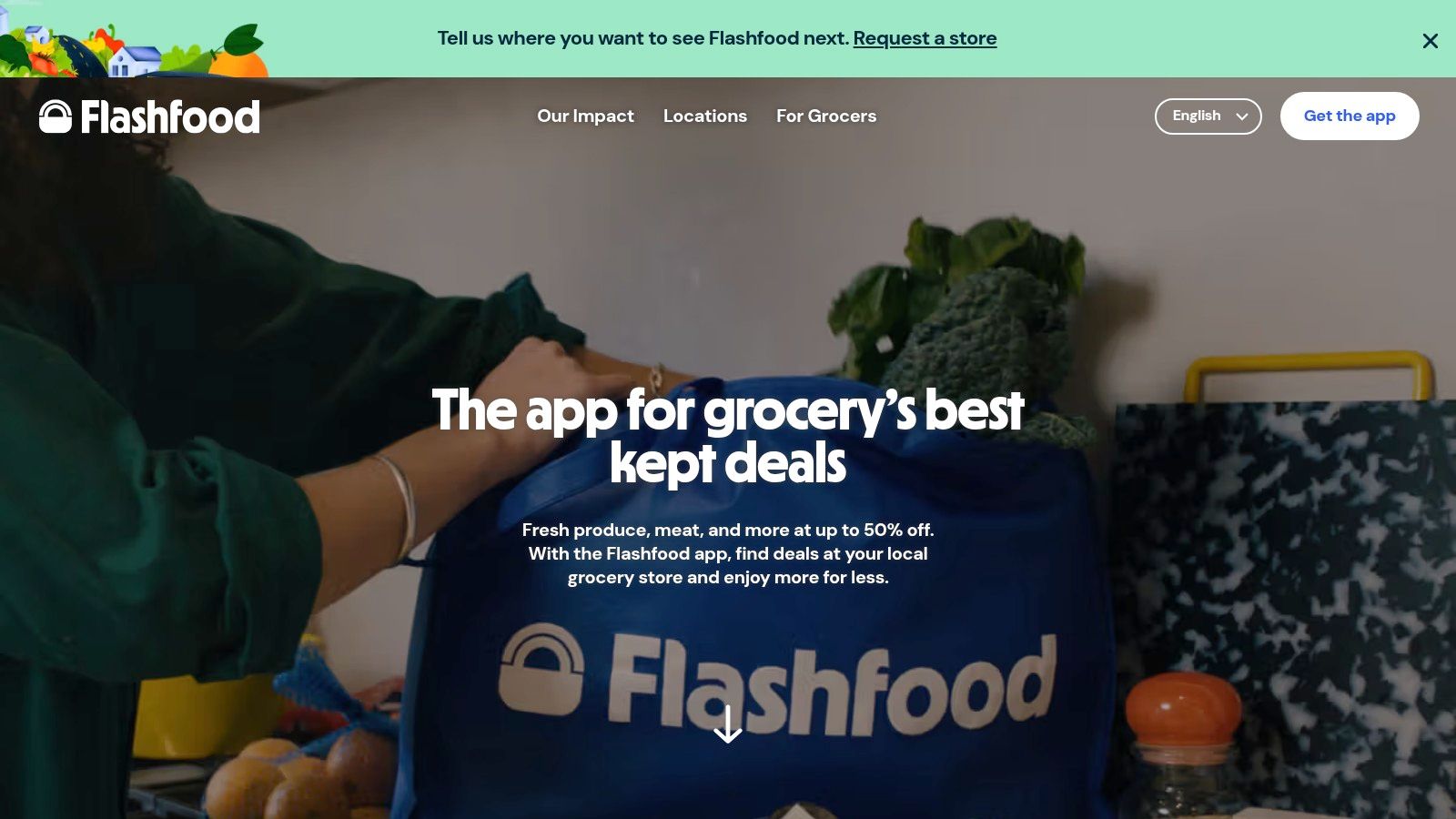
The practical value is obvious. You can save on meat, produce, dairy, and other essentials without wandering aisle to aisle hoping for markdown stickers. The pickup flow is also straightforward once you arrive, which helps on busy shopping days.
The trade-off is inventory volatility. What's listed can disappear fast, because these items are first-come, first-served. A variable service fee can also apply per order in the U.S., up to $2.99, so the savings math isn't always the same on every order Flashfood.
Flashfood is strongest for planned grocery stops. It's not a broad local discovery app, and it doesn't try to be. Instead, it solves a very specific problem, getting discounted grocery items into your cart quickly, with less waste.
Internal comparison note: the AIR.POG grocery-deals angle
<a id="8-travelzoo-local-deals"></a>
8. Travelzoo Local Deals
Travelzoo's local deals are built for people who want a more curated experience. The offers are editorially selected, which gives the platform a different feel from open-market coupon apps. If you're planning a date night, a spa visit, or a nicer meal, that curation can save time and reduce decision fatigue.
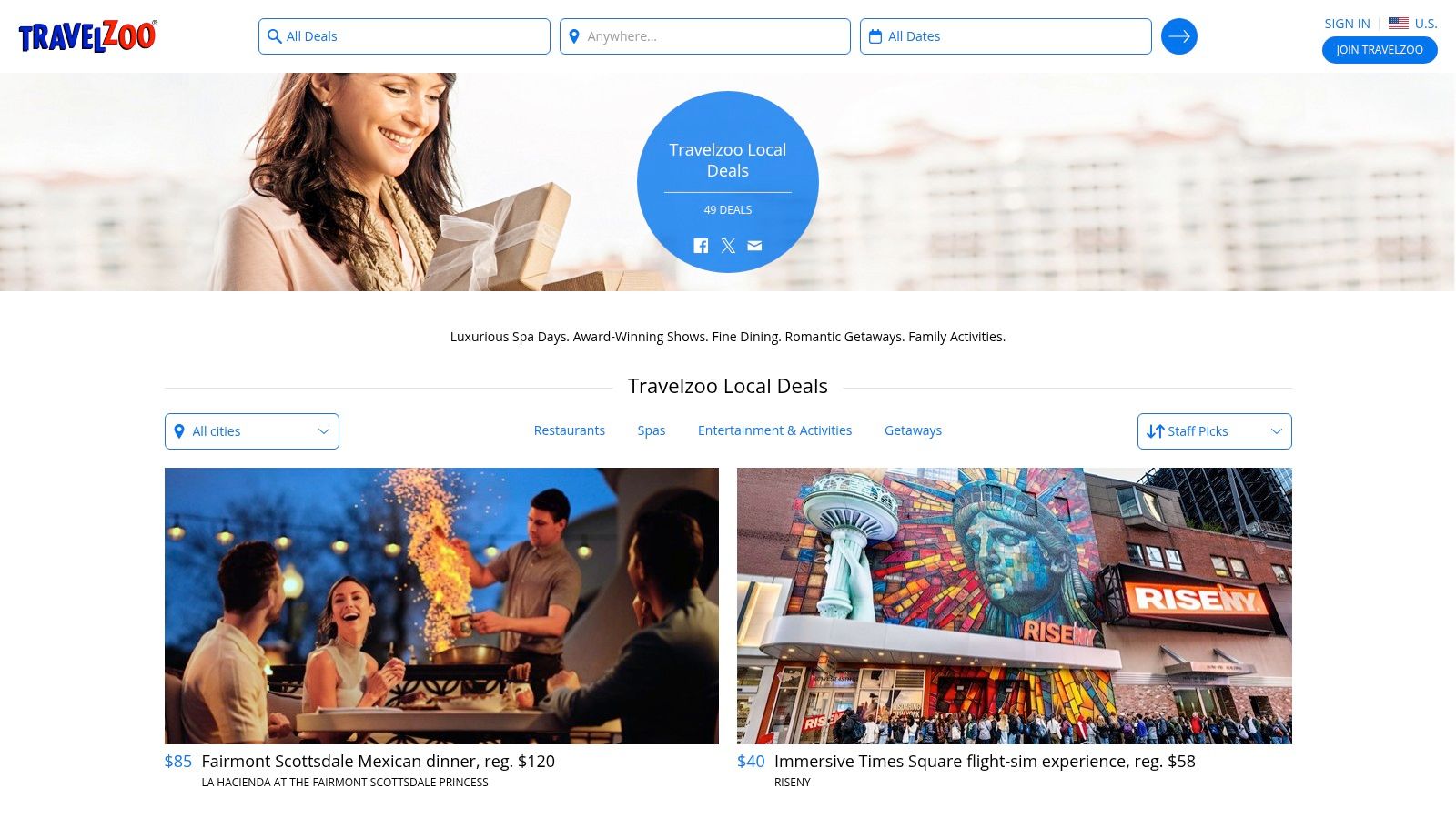
Travelzoo also tends to be a stronger fit for gifting and planned outings than for spontaneous everyday use. The terms are usually clearer than what you'll find in a random local listing, and the weekly highlight structure makes it easier to browse premium options without scrolling forever.
The downside is redemption style. Many offers still require voucher use rather than instant point-of-sale savings, which adds a step. That's fine for planning, but it's not ideal when you want to use a deal the same minute you see it.
Offer density also matters. In major metros and destination cities, Travelzoo can be excellent. Outside those areas, the selection is typically lighter, so the app loses some of its shine.
If you're booking experiences instead of chasing fast errands, Travelzoo is a smart tool. It feels more like a curated local guide with savings attached than a pure deal engine.
<a id="9-nextdoor-local-deals"></a>
9. Nextdoor Local Deals
Nextdoor's local deals work because the app already lives in neighborhood conversations. Businesses can post time-bound offers that show up in feeds, newsletters, and business pages, which gives nearby merchants a direct way to reach residents who already care about the area they live in.
That hyperlocal reach is the point. If you're a local buyer who likes shopping where you sleep, and you want offers from businesses in your own ZIP or neighborhood, Nextdoor can surface the kind of community-level promotions other apps miss. It's especially helpful in places where local merchants actively participate.
The drawback is uneven adoption. Some neighborhoods are lively, while others barely have enough merchant activity to make the feed useful. That means the app's value depends on your area's community health as much as on the product itself.
Nextdoor also isn't built primarily for immediate routing or precision browsing. It's more about discovery in a social neighborhood context. That can be useful, but it's a different mindset than tapping a map and heading straight to a store.
For community-minded shopping, Nextdoor is a good secondary tool. For fast, route-based deal finding, it's not the strongest standalone option.
<a id="10-shop-by-shopify"></a>
10. Shop by Shopify
Shop by Shopify is less of a pure deal app and more of a clean storefront and order-tracking hub. It helps shoppers browse products across many independent brands, track orders, and spot some local pickup availability when merchants support it. If you like small-business shopping but don't want to juggle a dozen store apps, it's handy.
The local angle is useful because it can show pickup options instead of defaulting to shipping. That makes it a strong fit for shoppers who want to support independent merchants while still getting the convenience of a unified interface.
The limitation is that discovery still leans heavily toward online storefronts. It's not designed as a live local deal scout, so savings depend on whatever promo the merchant has chosen to publish. In other words, Shop is great for managing purchases, but not especially strong for last-minute bargain hunting.
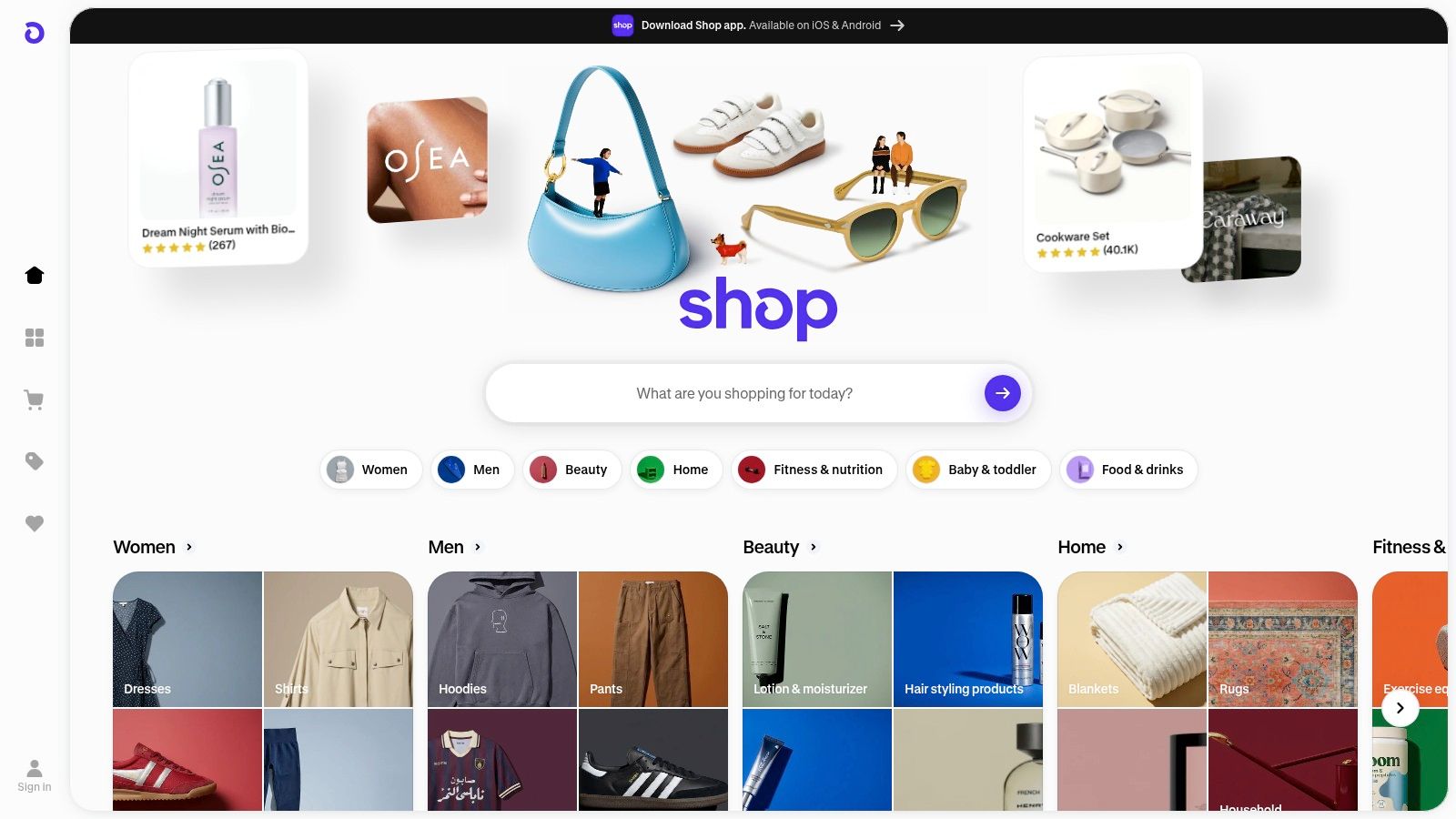
If you already know the merchant and want a smooth purchase flow, Shop does the job well. If you want a map of active offers near your current route, it's not the right tool.
<a id="top-10-shop-local-app-comparison"></a>
Top 10 Shop-Local App Comparison
| Product | Key features & USP (✨) | UX / Quality (★) | Price / Value (💰) | Target audience (👥) | |---|---:|:---:|:---:|:---| | AIR.POG 🏆 | ✨ Live proximity map + one‑tap routing; PWA install; POG REELS, POG'ODEX, POGZILLA, Ask AIR.POG | ★★★★, Drive‑focused, lightweight, low friction | 💰 Free account; high immediacy/value for on‑the‑go finds | 👥 Drivers, commuters, travelers, students, bargain hunters | | Groupon | ✨ Large voucher marketplace across categories; near‑me browsing | ★★★, Established, feature‑rich but can be cluttered | 💰 Frequent deep discounts; voucher redemption steps | 👥 Bargain hunters, planners, service seekers | | Yelp | ✨ Maps + reviews + business‑posted deals; reservations/ordering | ★★★★, Strong local coverage and reviews | 💰 Varies by merchant; deals depend on businesses | 👥 Restaurant-goers, local services seekers | | RetailMeNot | ✨ Aggregated promo codes, app cash‑back, stackable offers | ★★★, Useful at checkout for online & app offers | 💰 Good for last‑minute savings; cash‑back payout windows | 👥 Online shoppers, chain buyers, coupon users | | Upside | ✨ Location‑aware cash‑back (gas, dining); check‑in/receipt upload | ★★★, Quick, map‑based rewards on the go | 💰 Immediate cash‑back potential; rates vary by location | 👥 Commuters, drivers, frequent travelers | | Too Good To Go | ✨ Hyperlocal “Surprise Bags” from nearby food vendors | ★★★★, Strong savings; time‑sensitive pickup UX | 💰 Very deep discounts; pickup required | 👥 Budget eaters, sustainability‑minded users | | Flashfood | ✨ Near‑expiry grocery markdowns; in‑app purchase + pickup | ★★★★, Clear pickup flow; fast savings | 💰 Steep grocery discounts; occasional service fee | 👥 Grocery shoppers, deal hunters | | Travelzoo (Local) | ✨ Editorially vetted local vouchers; “Top 20” curation | ★★★★, Curated, reliable offers for planned outings | 💰 Good value for premium venues; voucher redemption | 👥 Planned leisure, gift buyers, premium seekers | | Nextdoor (Local) | ✨ Neighborhood‑targeted Local Deals; feed & email reach | ★★★, Hyperlocal reach; variable density by area | 💰 Local merchant promos; depends on neighborhood | 👥 Neighbors, community shoppers, local businesses | | Shop (by Shopify) | ✨ Storefront discovery + local pickup indicators; Shop Pay | ★★★, Clean shopping & order tracking; less deals focus | 💰 Pricing set by merchants; pickup convenience adds value | 👥 Small‑business shoppers, local pickup seekers |
<a id="your-next-favorite-local-spot-is-one-tap-away"></a>
Your Next Favorite Local Spot Is One Tap Away
The best shop local app is the one that fits how you move through the day. If you plan outings and want curated value, Travelzoo and Groupon are strong. If you care about neighborhood context and reviews, Yelp and Nextdoor can help. If you want savings tied to errands, Upside, Flashfood, and Too Good To Go each solve a different kind of real-world stop.
AIR.POG stands apart because it treats local discovery as a live navigation problem, not a scrolling problem. That matters when you're commuting, exploring a new city, or deciding whether a stop is worth your time right now. The combination of map-first browsing, one-tap routing, and Progressive Web App delivery makes it feel lighter and faster than the usual app-store download cycle.
The broader market points in the same direction. Shopping apps already command meaningful attention, retention is still a challenge across the category, and local searches often lead to visits quickly once people find something relevant On Deck, Shno. That's why the best tools don't just show offers, they shorten the time between spotting a deal and standing at the door.
If you want a smarter way to shop local, start with the app that behaves like a real-time field guide. Open AIR.POG, put it on your home screen, and use it the next time you're out driving, running errands, or exploring somewhere new.
Spread the word — every share brings more POG'rs to the map. 🎯
Got a story or tip?